
Climate Physical Risk Assessment for Critical Infrastructure
In 2025, Climate Resilience was engaged by an impact investment partner to provide a Climate Change Physical Risk Assessment (CCPRA). The proposed asset site was in Finland and the report was required for disclosure and governance purposes but also provided integrated risk tools for business continuity, environmental monitoring and adaptation.
The assessment examined how climate change could influence the long-term performance, reliability and resilience of the asset over its 30-year design life, providing investors and developers with a robust understanding of future risks and adaptation opportunities.
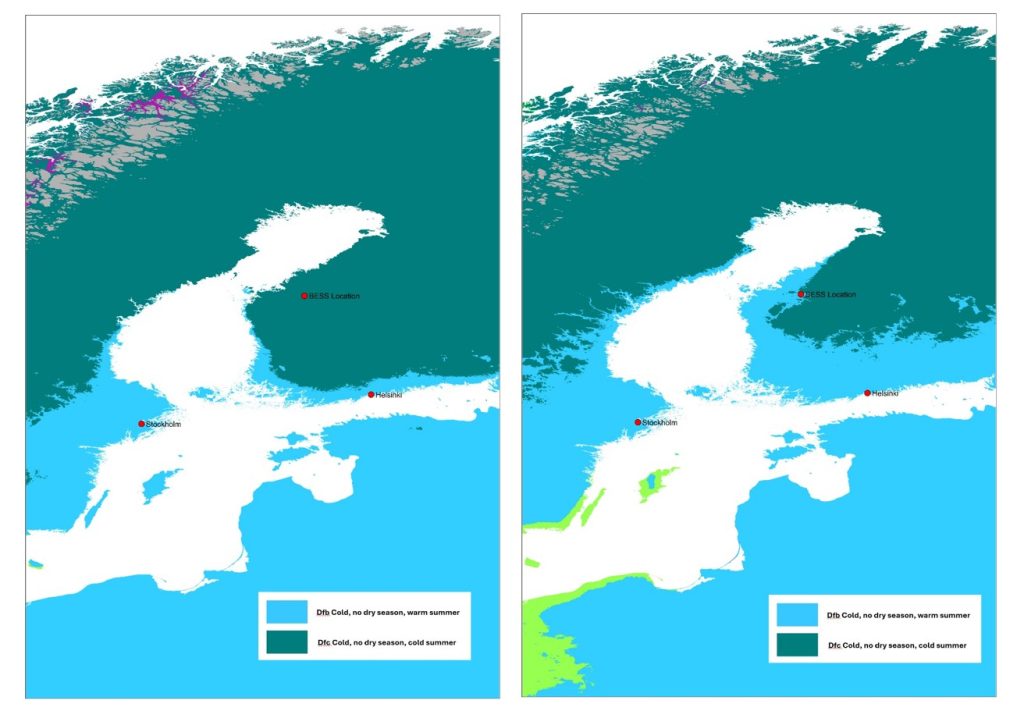
The assessment was undertaken in accordance with ISO 14091:2021 – Adaptation to Climate Change: Guidelines on Vulnerability, Impacts and Risk Assessment, ensuring alignment with internationally recognised best practice. It also incorporated the European Union Sustainable Finance Taxonomy and Do No Significant Harm (DNSH) requirements, providing a framework suitable for disclosure, sustainable finance, infrastructure investment and ongoing risk management through integration to business continuity planning and incident response.
Rather than relying solely on broad-scale projections, the assessment combined multiple lines of evidence to produce a location-specific understanding of risk. Local meteorological observations, historical weather records, topography, soils, hydrology, land use and satellite imagery were integrated with CMIP6 projections under IPCC Shared Socioeconomic Pathways (SSP2-4.5 and SSP5-8.5). This enabled the assessment to distinguish between regional climate trends and the actual exposure of the individual asset.
The study evaluated both acute hazards, including extreme rainfall, flooding, storms, wildfire, drought and severe weather, together with chronic hazards such as increasing temperatures, changing precipitation patterns, wind, water availability and longer-term environmental change. Each hazard was assessed in terms of exposure, sensitivity and adaptive capacity, consistent with ISO 14091 principles, to determine future vulnerability and risk.
A key strength of the assessment was its emphasis on understanding the physical characteristics of the site. Elevation, catchment configuration, proximity to watercourses, geology, vegetation, local climate observations and surrounding infrastructure were analysed to determine whether projected climate changes would translate into meaningful operational risks. This avoided overestimating hazards based solely on regional IPCC projections and instead focused on credible, evidence-based risks relevant to the asset. A key consideration that brought significant confidence to the project, was understanding and inclusion of glacial rebound for the region and the potential impacts and opportunities that may result.
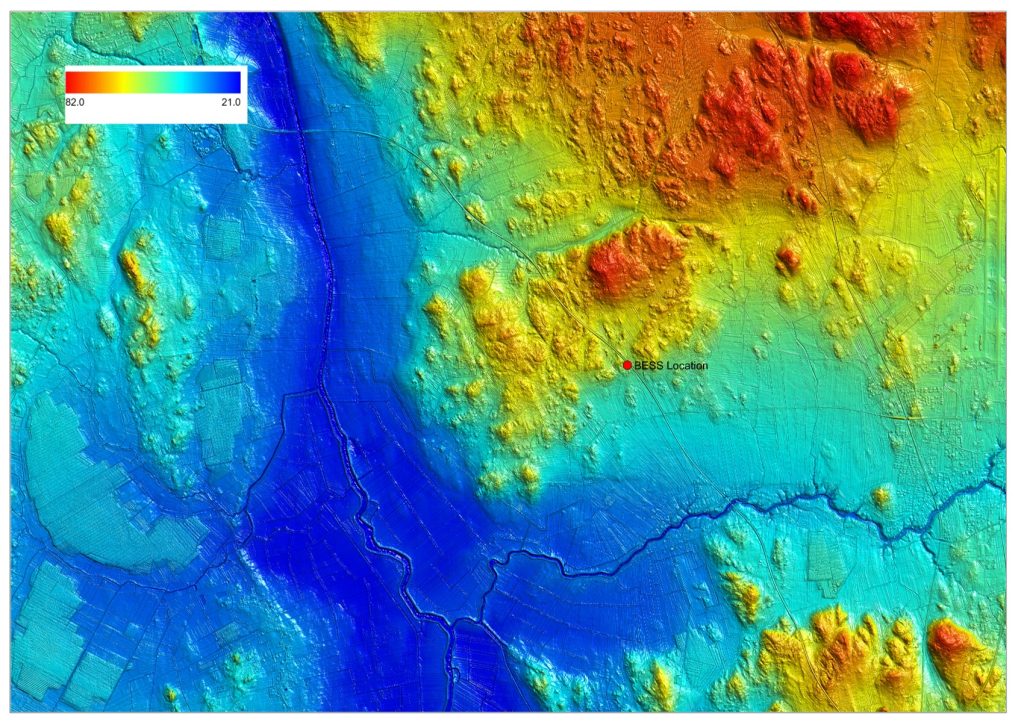
The project also recognised that generalised projections alone do not provide complete answers. For hazards such as wildfire, severe storms and flooding, the assessment combined global science with local historical observations, peer-reviewed research and engineering judgement to provide practical advice for infrastructure planning. This approach acknowledged the uncertainties associated with climate modelling while still providing decision-makers with a defensible basis for investment and risk management.
The outcome was a structured risk assessment supported by practical recommendations for adaptation, operational resilience and future investigation. These included consideration of emergency management arrangements, monitoring strategies, business continuity planning, infrastructure design enhancements and targeted quantitative studies where additional detail would provide value.
This project demonstrates Climate Resilience’s capability to deliver internationally aligned physical climate risk assessments for critical infrastructure across the energy, water and infrastructure sectors. By combining climate science, engineering, hydrology and operational risk management, Climate Resilience helps organisations understand not only how the environment may change, but what those changes mean for individual assets, investment decisions and long-term resilience.
Other countries where CCPRA have been undertaken include Tanzania, Australia, Rwanda and Kenya. The aim of such studies is to inform risk management as the environment changes allowing asset owners to chart a course that can be modified as new information on climate risk is identified.