Projects
Provided training for a Queensland local authority to ensure staff were assessed as competent for operating a gated dam during emergency events. Training included strategic links to regulation and safety, facilitating and testing knowledge understanding.
Engaged to provide an independent review into liquidated damages at a major project construction site in Southeast Queensland. Climate Resilience supported the contractor by independently assessing what constituted a reasonable risk allocation for wet weather delay compared to the lived experience of the project, and the information known on seasonal climate drivers at risk allocation. The final report summarised meteorological evidence and determined that the contractor could not reasonably have foreseen such conditions and therefore impacts at tender.
Engaged by Townsville City Council to undertake a maturity assessment and gap analysis of dam safety governance, compliance, and risk exposure for Ross River Dam. The resulting strategic roadmap provided clear recommendations to strengthen risk management frameworks, improve regulatory alignment, and enhance asset management and operational practices for this critical water infrastructure. Key outcomes included revised organisational reporting lines and the introduction of strengthened governance processes and procedures, which were subsequently implemented.
The assessment framework was developed from Australian Government documentation and benchmarked against ANCOLD guidance. A regulatory compliance checklist was also created to support ongoing assurance.
Engaged to deliver a whole of life cost assessment for Queensland Rail during reference design for key bridge sites along the rail corridor, with a focus on flood immunity. The assessment evaluated alternative construction approaches at a strategic level (e.g. earth embankment vs. viaduct), estimated lifecycle repair and maintenance costs and quantified potential revenue loss, e.g. from Citytrain network disruption. The review investigated historical flood occurrence and included some increase in frequency for climate risk to inform investment decisions.
Additionally engaged as Owner’s Engineer to Queensland Rail, providing a strategic review of flood impacts, assessment methodologies, and outcomes to inform investment decisions and ensure resilience of critical rail infrastructure.
Designed and delivered Director training for a Government Owned Corporation, equipping Directors with the critical questions required to assure themselves that dam safety management programs and major infrastructure projects are being implemented in alignment with organisational risk appetite, regulatory intent, and societal expectations.
The training explored the practical application of As Low As Reasonably Practicable (ALARP) and So Far As Reasonably Practicable (SFARP) frameworks, with a focus on how Boards can demonstrate discharging their duty of care. It also included cyber security risk content, covering key questions to mitigate gated dam control and an overview of the Security of Critical Infrastructure (SOCI) Act.
The content was informed by extensive executive experience across Queensland’s dam safety sector, including leadership during major water infrastructure projects such as the Paradise Dam essential works, oversight of a dam safety program for a portfolio of 21 referable dams, and participation in more than 50 Emergency Action Plan activations responding to earthquakes, cyclones, record floods, gate vibration and piping incidents. James also authored the Queensland Dams Emergency Action Plan template adopted by the state regulator in 2017, and contributed to the national review of the SOCI Act.
Appointed as a member of a review Panel for a major North Queensland Dam detailed risk assessment. The downstream area has the second largest Population at Risk (PAR) in the state.
Climate Resilience was engaged in an advisory capacity to a London based impact investment firm to provide strategic input on physical climate risk into project and investor frameworks. Our role ensured that engineering design and project scope were informed by robust risk assessment, a critical requirement for investors seeking confidence in the long-term physical resilience and sustainability of this major water supply project.
Climate Resilience was commissioned to provide forensic review services and advice on a 2023 flood event in inner Brisbane to ascertain if the cause was related to construction near the site. The review examined physical events, site system and process, design information, and photographic evidence to reconstruct the sequence of events leading to property flooding and provided a cause determination.
In 2025, Climate Resilience was engaged by Nala Renewables to provide a Climate Change Physical Risk Assessment (CCPRA). The proposed asset site was in Finland and the report was required for climate disclosure purposes. See Infographic below
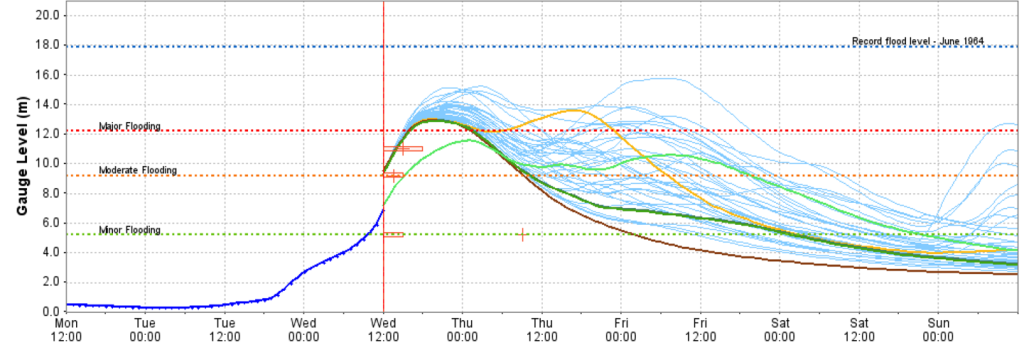
Climate Resilience was engaged by the Bureau of Meteorology to provide advice and strategic input to the Bureau expert team tasked with putting together a business case for a new flood warning system for South East Queensland.
Climate Resilience put together the system architecture, reviewed current systems from the USA, Japan, Taiwan, and the UK, for best fit with Australian systems and culture, and collaborated to deliver a project roadmap and business case for SEQ that could also form a future framework for all Australian States and key agencies, such as NEMA.
The project was delivered in late 2023 and provides for a modular, integrated approach for implementing extent based warning, and event likelihood information for two separate audiences – emergency managers, and the general public. This will represent a seismic shift in flood warning in Australia, a system largely unchanged from federation.
The plan objective is to ensure those impacted by a potential flood receive an SMS warning and that this would be seamless between flash and riverine flood drivers, providing unambiguous clarity.
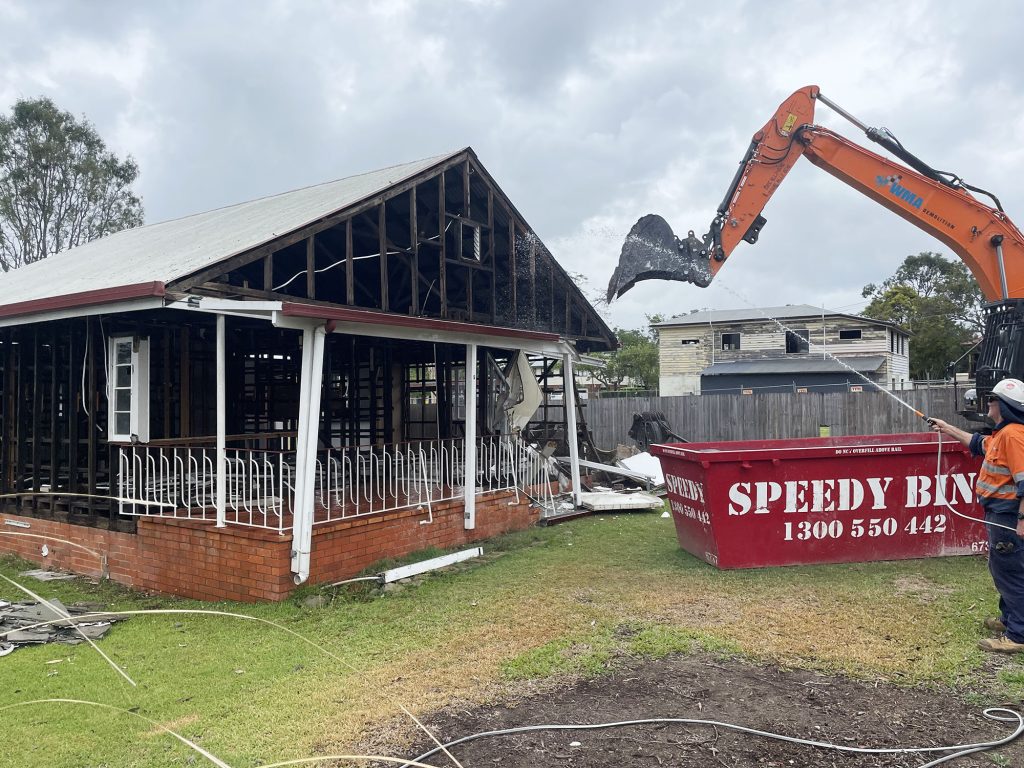
The Resilient Homes Fund (RHF) was an initiative by the Queensland Government in response to the devastating floods of 2022. With a $512 million budget for voluntary home buy backs (VHBB), the remainder of the fund was administered for retrofitting or raising to improve the resilience of homes.
Climate Resilience provided integrated support for the Queensland Reconstruction Authority (QRA) for the VHBB criteria development, eligibility assessments, stakeholder engagement, and project governance.
Over 6000 registrations of interest have been assessed against LGA and program criteria, with only around 10% proceeding for VHBB. The program has created international interest with New Zealand, Cambodia and Canada seeking briefings from the QRA.
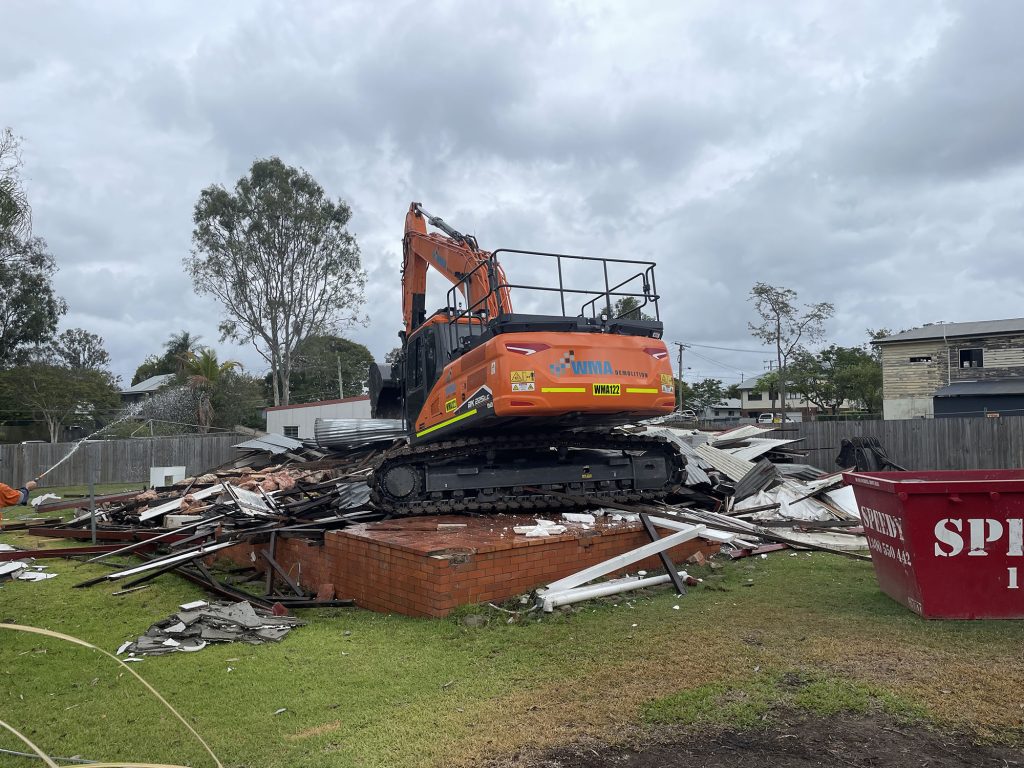
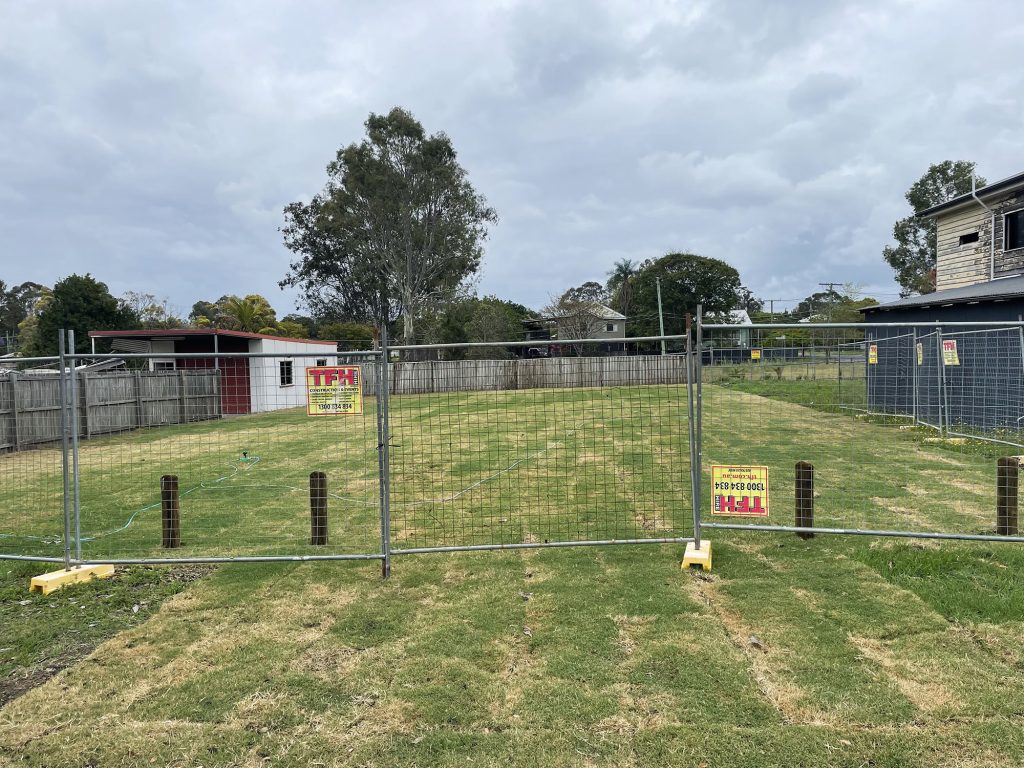
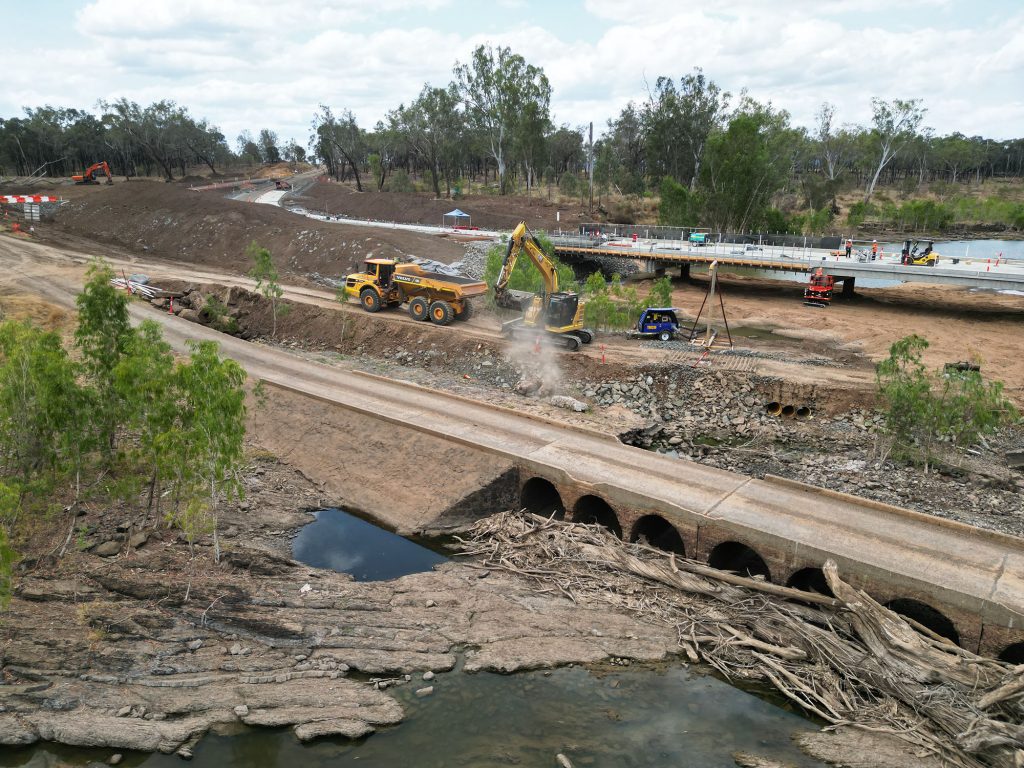
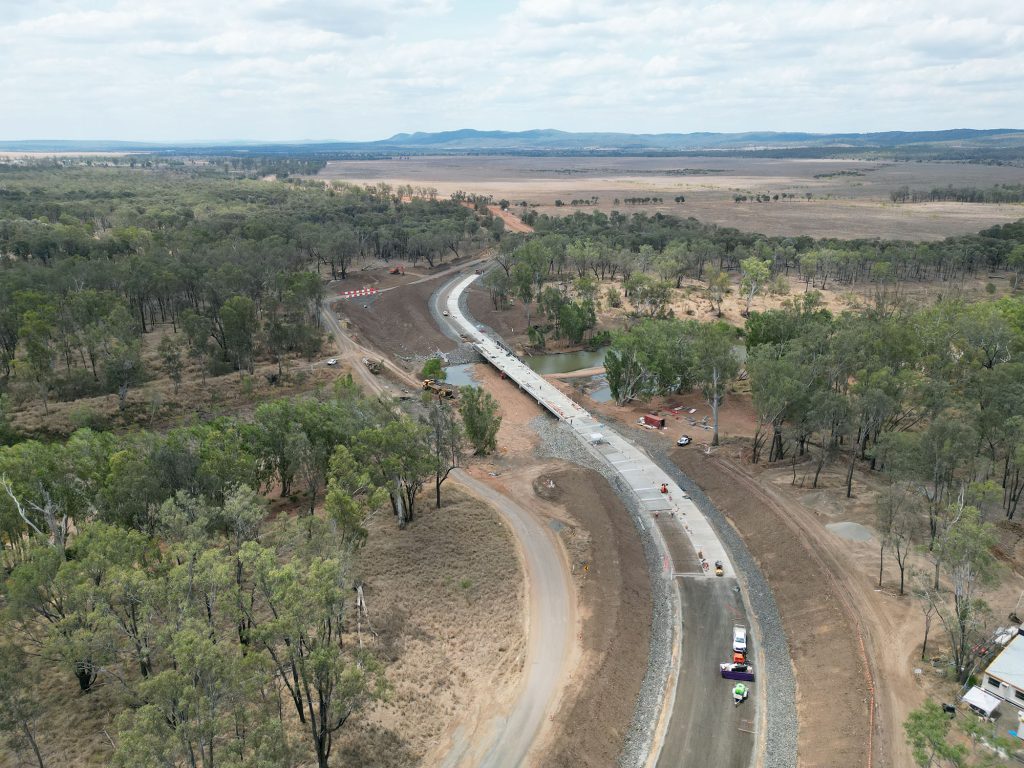
Climate Resilience was engaged by RedFox Advisory to provide detailed wet weather risk for contract contingency and project delivery planning for the new Mackenzie River crossing, at Foleyvale in Central Queensland.
The information was used to demonstrate the need for an accelerated program on award to ensure completion prior to the onset of the 2023-24 wet season.
In addition, a hydrological assessment included estimation of a low flow rating curve from height only data, for reconstruction of historical frequency at key survey levels across the site. Prior studies underestimated the impact of backwater on project risk.
The project was opened to the public on 19 November 2023 with no unforeseen wet weather impacts to the project. Photos below courtesy Red Fox Advisory.